Content Menu
● Why This Decision Matters Now
● What Is a Standard Aluminum Extrusion Machine?
● What Is a Customized Aluminum Extrusion Machine?
● Standard vs. Customized: Side-by-Side Comparison
● Cost: Look Beyond the Price Tag
● Lead Time and Commissioning
● Product Fit: The Deciding Question
● Practical Insight: A Mismatch We See Often
● The 5-Step Selection Process
● When a Hybrid Approach Works Best
● Quality and Technical Credibility to Check
● Which Option Fits Your Factory?
● Take the Next Step
● Frequently Asked Questions
>> 1. Is a standard extrusion press cheaper than a customized one?
>> 2. How long does a customized extrusion press take to build?
>> 3. How do I choose the right tonnage?
>> 4. Can I upgrade a standard press later?
>> 5. How much do extrusion dies cost?
>> 6. What should I check before choosing a supplier?
● References
Choosing between standard and customized aluminum extrusion machines is one of the biggest capital decisions a profile factory will make. A press stays in service for 15 to 20 years. A poor match locks in higher energy costs, scrap, and downtime for that whole period.
At Foshan Yejing Machinery Manufacturing Co., Ltd., we have spent 36 years building extrusion equipment. We have delivered more than 3,000 presses, from 600 to 9,000 tons, to customers in over 30 countries. Our experience points to one conclusion. Neither option is "better" in general. The right choice depends on your products, your volumes, and your growth plan.
This guide compares both options and gives you a practical way to decide.
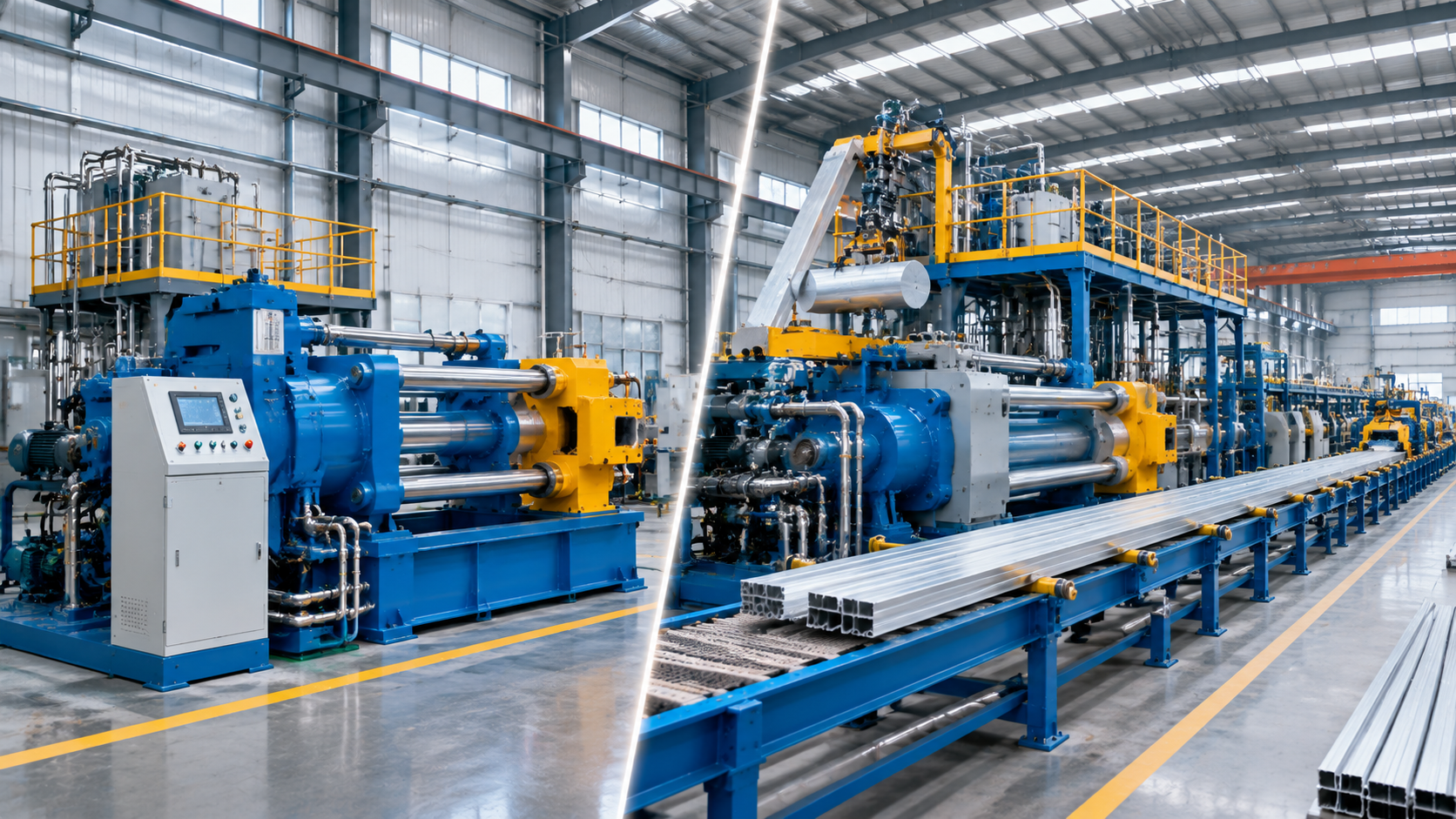
Why This Decision Matters Now
Demand for extruded aluminum keeps rising. Estimates put the global market at about USD 98 to 105 billion in 2025. Forecasts show it growing at roughly 7% to 9% a year through the early 2030s. Asia-Pacific holds more than 74% of the market.
More demand brings more competition. Buyers want tighter tolerances, new alloys, and faster delivery. Your press must support that, not hold you back.
What Is a Standard Aluminum Extrusion Machine?
A standard extrusion press is a proven, catalog-based model. Its tonnage, container size, stroke, and hydraulic layout are fixed. Manufacturers build these models repeatedly, so the design is mature and well tested.
Typical features include:
- Fixed tonnage ratings, such as 600T, 900T, 1250T, or 1600T
- Preset container diameters and billet lengths
- A standard control package with common PLC logic
- Ready spare-parts lists and faster commissioning
Standard presses suit factories making common profiles, such as window frames, door frames, and simple industrial sections.
What Is a Customized Aluminum Extrusion Machine?
A customized extrusion press is engineered around your specific requirements. Your supplier adjusts the press, the auxiliary equipment, or the whole line to fit your production targets.
Customization can include:
- Special container bores or billet lengths
- Modified frame and cylinder designs for large or complex profiles
- Added equipment, such as billet heaters, quenching systems, stretchers, and handling systems
- Integrated automation, such as online data monitoring and intelligent control
- Layouts adapted to your plant, including limited floor space or ceiling height
A custom build is a tailor-made production line, not just a bigger or smaller press.
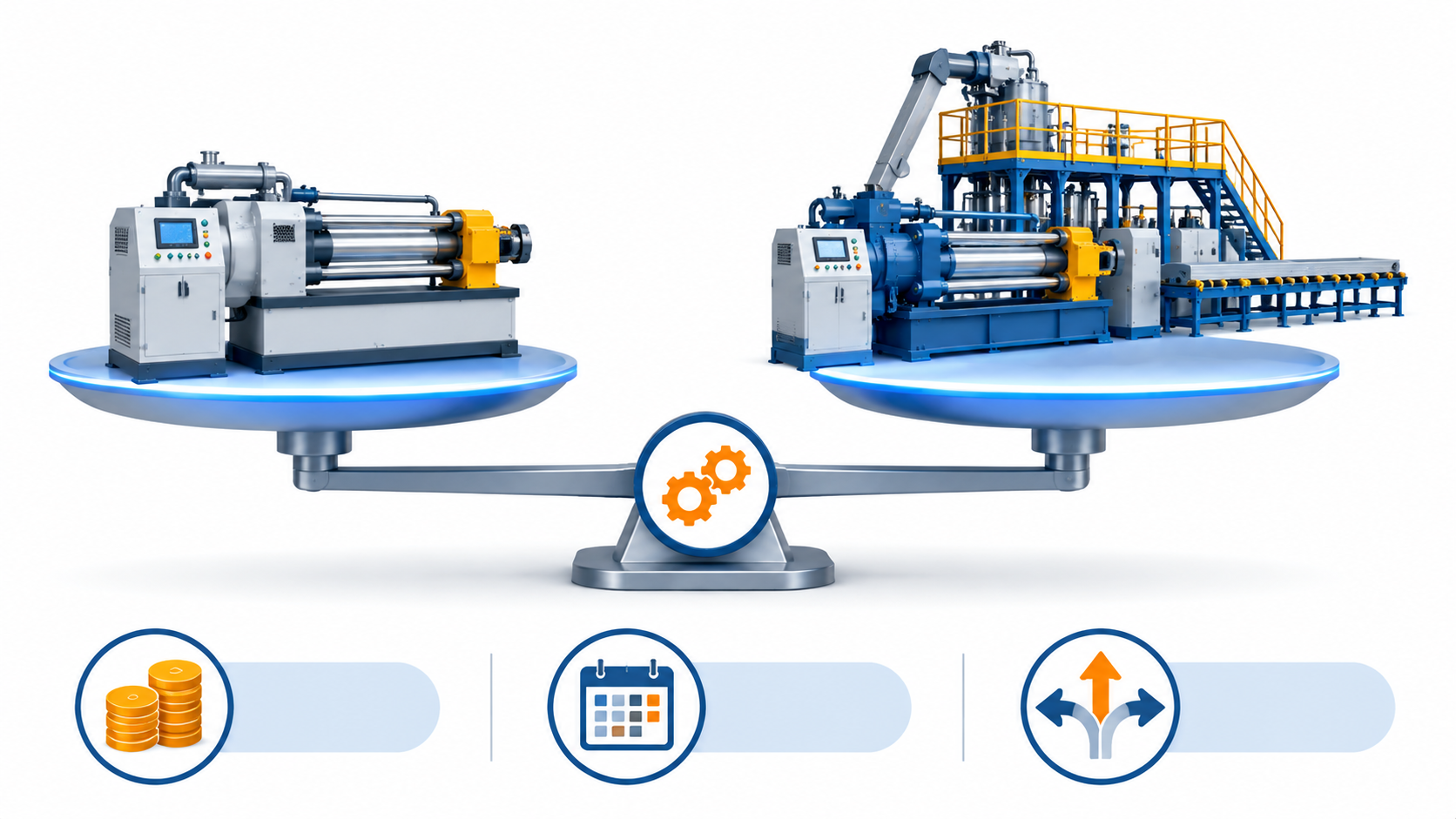
Standard vs. Customized: Side-by-Side Comparison
| Factor | Standard Machine | Customized Machine |
| Upfront cost | Lower | Higher |
| Delivery time | Shorter | Longer; custom builds can take 4–8 months |
| Profile flexibility | Best for common shapes | Best for complex, large, or special profiles |
| Energy and output efficiency | Good for average duty | Can be tuned to your exact product mix |
| Installation risk | Low, proven design | Moderate, needs detailed engineering |
| Spare parts | Easy and interchangeable | Some parts are specific to your design |
| Future expansion | Limited by fixed specs | Can be planned into the design |
| Best for | Start-ups, stable product lines | Specialized, high-value, or fast-growing producers |
Cost: Look Beyond the Price Tag
Price is the first thing buyers compare. It is also the easiest thing to misread.
A standard press costs less to buy. A custom press costs more up front, but it may cost less to run if it fits your products. The same logic applies to dies. A custom die often costs between roughly USD 1,000 and 5,000, depending on size and complexity. That cost is spread over every kilogram you produce. One industry example shows a USD 2,000 die adds only USD 0.20 per unit across 10,000 parts.
Consider total cost of ownership, not just purchase price:
1. Purchase price of the press and auxiliary equipment
2. Energy use per ton of aluminum extruded
3. Scrap and rework rates
4. Die and tooling costs
5. Maintenance and spare parts over 15 to 20 years
6. Downtime during commissioning and changeovers
A press that is slightly cheaper to buy but poorly matched to your profiles often loses that saving in scrap and slow output within a few years.
Lead Time and Commissioning
Delivery speed matters when you are chasing a market window.
Standard presses usually ship sooner because the design, drawings, and components are ready. Custom builds need design review, drawing approval, and sometimes special component sourcing. Published buyer guides cite 4 to 8 months for custom press builds.
Plan the schedule backward from your target start-up date. Allow time for foundation work, installation, trial runs, and operator training. Delays in any of these steps push your first revenue date back.
Product Fit: The Deciding Question
Start with your products, not the machine catalog. Ask which profiles you will run most of the time, not just once or twice a year.
A standard machine is usually enough if you make:
- Architectural profiles with moderate cross-sections
- Standard industrial profiles and common alloys, such as 6063 and 6061
- Steady monthly volumes with few design changes
A customized machine is usually the better choice if you make:
- Large-section or wide profiles for rail, transport, or new energy vehicles
- Thin-wall, multi-hollow, or high-precision profiles
- Heat-sink, photovoltaic, or other specialty profiles
- Many alloys, requiring tight temperature and speed control
Industry guidance agrees on this point. Your maximum profile size and complexity set the required tonnage and press design.
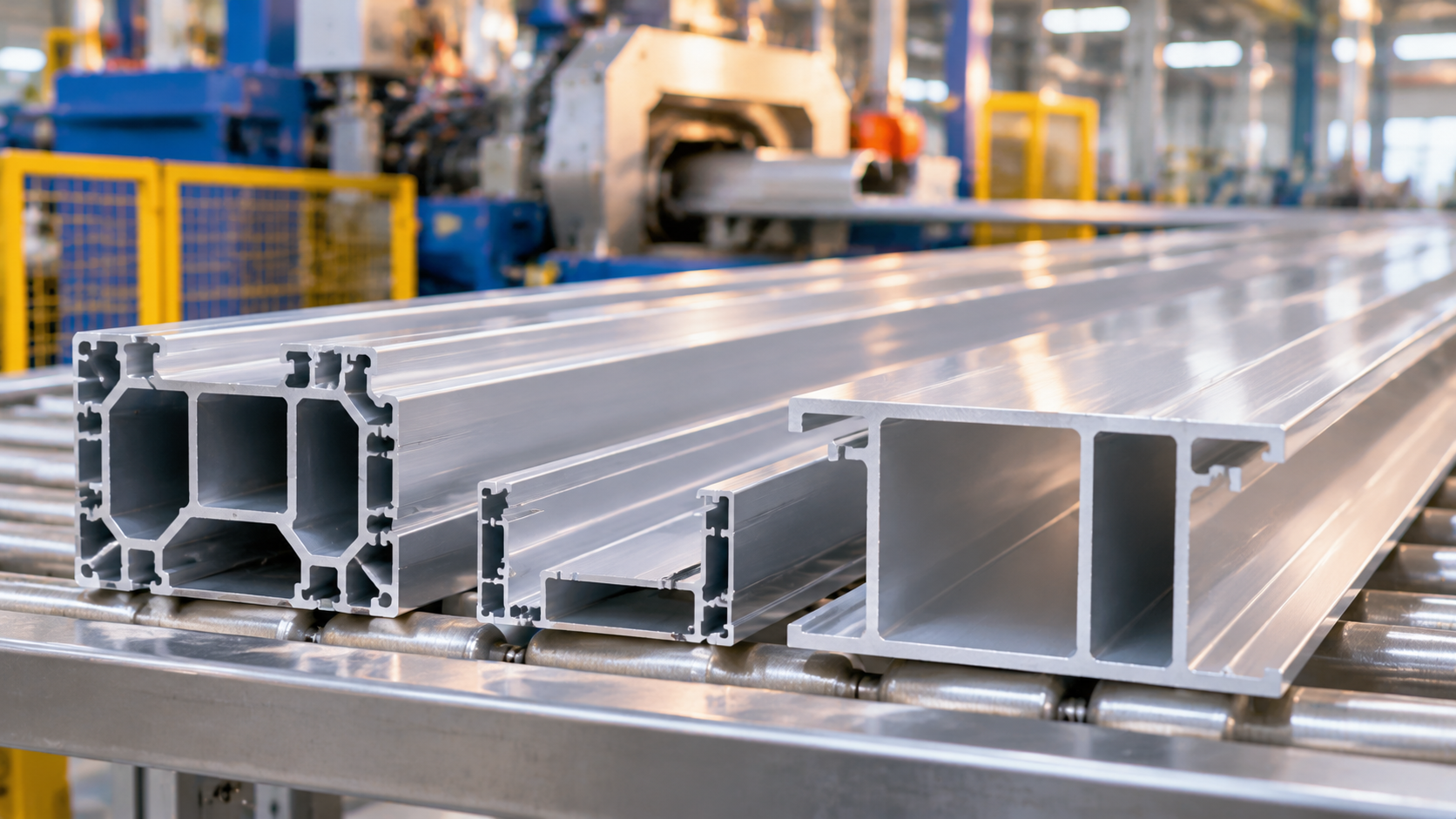
Practical Insight: A Mismatch We See Often
In our experience, the most common problem is not a bad press. It is an undersized or generic press running the wrong job.
A factory buys a standard press to save budget. A year later, it wins an order for wide, complex profiles. The press can run them only slowly, with high scrap. The factory then pays for a second machine.
The reverse also happens. A small workshop orders a heavily customized line it does not need. It pays extra for features it never uses.
The best outcome comes from honest planning. Define your three-year product roadmap first. Then decide how much customization is truly worth paying for.
The 5-Step Selection Process
Use this simple process before you request quotations.
1. List your target profiles. Gather drawings, weights, and alloys for your top 10 to 20 products.
2. Calculate your required tonnage. Use circumscribing circle size, extrusion ratio, and alloy to estimate press capacity. Ask your supplier to verify it.
3. Forecast your volume. Estimate annual output and expected growth over three to five years.
4. Audit your site. Check floor space, crane height, power supply, cooling water, and foundation conditions.
5. Decide your automation level. Choose between basic manual control and a connected, data-driven production line.
If the first four steps point to common profiles and steady volumes, start with a standard press. If they show complex shapes, special alloys, or fast growth, plan a customized solution.
When a Hybrid Approach Works Best
You do not have to choose one extreme. Many successful factories use a standard press body with targeted custom upgrades.
Common upgrades include:
- A special container or billet length for your main product
- A larger or modified cooling and quenching section
- Automated billet loading and profile handling
- Intelligent control and monitoring for temperature, speed, and pressure
This approach keeps lead times and costs manageable while solving your most important technical needs. It is often the most practical option for growing manufacturers.
Quality and Technical Credibility to Check
Whichever route you take, verify the supplier before you sign. Check these points:
- Certifications, such as ISO 9001 and CE marking
- A track record of presses installed in factories like yours
- In-house manufacturing and assembly capacity, not just trading or outsourcing
- Testing and commissioning before shipment
- After-sales service, including remote support, spare parts, and training
Ask for reference customers in your region. A supplier with real installations in countries such as Australia, South Korea, Türkiye, or Brazil can show you how its machines perform under different power, climate, and market conditions.
Which Option Fits Your Factory?
| Your Situation | Recommended Choice |
| New factory, common architectural profiles, tight budget | Standard machine |
| Stable orders, few product changes | Standard machine |
| Large, complex, or high-precision profiles | Customized machine |
| Fast growth or new market entry planned | Customized or hybrid |
| Limited space or unusual plant layout | Customized machine |
| Need full line integration and automation | Customized complete line |
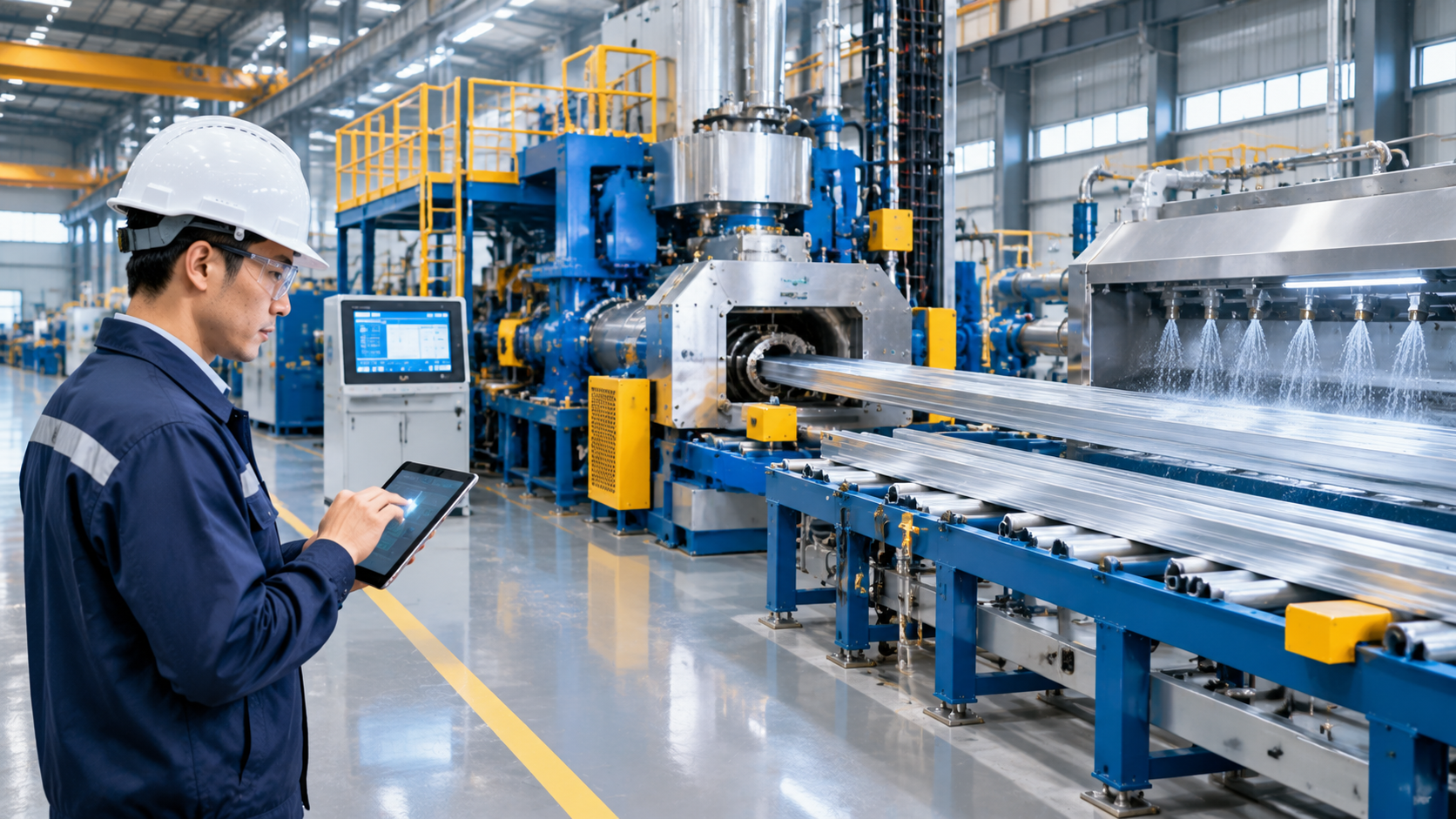
Take the Next Step
Selecting the right press is easier with an experienced engineering partner. Foshan Yejing Machinery Manufacturing Co., Ltd. supplies extrusion presses, auxiliary equipment, and intelligent production lines from 600 to 9,000 tons.
Send us your profile drawings, alloys, and target output. Our engineers will review them and recommend a standard, customized, or hybrid solution, with a clear quotation and delivery plan. Contact our team today to start your project.
Frequently Asked Questions
1. Is a standard extrusion press cheaper than a customized one?
Usually yes at purchase. Standard presses use proven designs and ready components. However, a custom press can lower long-term cost if it reduces scrap, saves energy, and fits your products better.
2. How long does a customized extrusion press take to build?
It depends on size and complexity. Published buyer guides cite about 4 to 8 months for custom press builds. Standard models generally deliver faster. Confirm the schedule in writing before you order.
3. How do I choose the right tonnage?
Start with your largest profile and its complexity. These determine the required force and container size. Your supplier should confirm the calculation using your alloy, extrusion ratio, and output target.
4. Can I upgrade a standard press later?
Often yes, but within limits. Auxiliary equipment, such as handling systems, quenching, and controls, is easier to upgrade than the main frame. If you expect major growth, plan expansion room at the start.
5. How much do extrusion dies cost?
Prices vary widely by size and complexity. Industry sources cite roughly USD 400 to 2,000 for common dies and USD 1,200 to 5,000 or more for hollow, complex, or large dies. Large dies for 2,000 to 4,000 ton presses can cost more.
6. What should I check before choosing a supplier?
Check certifications such as ISO 9001 and CE, in-house manufacturing capacity, installed references, and after-sales support. Visit the plant if possible, or request a video of a press under test.
References
1. [Aluminium Extrusion Press Technical Guide: How the Process Works and How to Choose]
2. [Fortune Business Insights, Aluminum Extrusion Market Size, Share & Forecast 2034]
3. [SLX Extrusion Press, How Much Does an Aluminum Extrusion Press Cost? A Complete Buyer's Comparison Guide]
4. [Hydromech Industries, Metal Extrusion Press Specifications (Scribd)]
5. [MarketsandMarkets, Aluminum Extrusion Market Report 2025–2030]
6. [Grand View Research, Aluminum Extrusion Market Size & Share Report, 2026–2033]
7. [SkyQuest, Aluminum Extrusion Market Size, Share & Growth Report]
8. [Shengxin Aluminium, How Much Does Aluminum Extrusion Cost? Hidden Fees Exposed]
9. [IMARC Group, Aluminum Extrusion Market Size & Report Forecast 2034]
12. [Gabrian, 5 Important Factors That Impact the Cost of Custom Aluminum Extrusions]


