Content Menu
● How These Manufacturers Were Selected
● Manufacturer Comparison
● The 10 Manufacturers
>> 1. Foshan Yejing Machinery Manufacturing Co., Ltd.
>> 2. Xinxinke Extrusion Press
>> 3. Wuxi Weite Machinery Co., Ltd.
>> 4. Wuxi Yuanchang Machinery Co., Ltd.
>> 5. COMETAL (Foshan) Extrusion Technology Co., Ltd.
>> 6. Foshan Sailixin Machinery Manufacturing Co., Ltd.
>> 7. Taiyuan Heavy Industry / TZ Extrusion Equipment
>> 8. Foshan Qisheng Machinery Technology Co., Ltd.
>> 9. Foshan Tongrun Aluminum Equipment Co., Ltd.
>> 10. Guangdong SAVE Intelligent Equipment Co., Ltd.
● Buyer's Guide: Prevent Expensive Specification Gaps
>> An Overlooked Contract Trap
>> Compliance Requires More Than Logos
● Conclusion
● FAQ
>> 1. How can we verify whether an ISO certificate has expired?
>> 2. Does a CE certificate cover the complete production line?
>> 3. How should we compare different press-force units?
>> 4. Who is responsible when the press passes testing but the line misses output targets?
>> 5. How can we reduce dependence on the original controls supplier?
● Source Notes
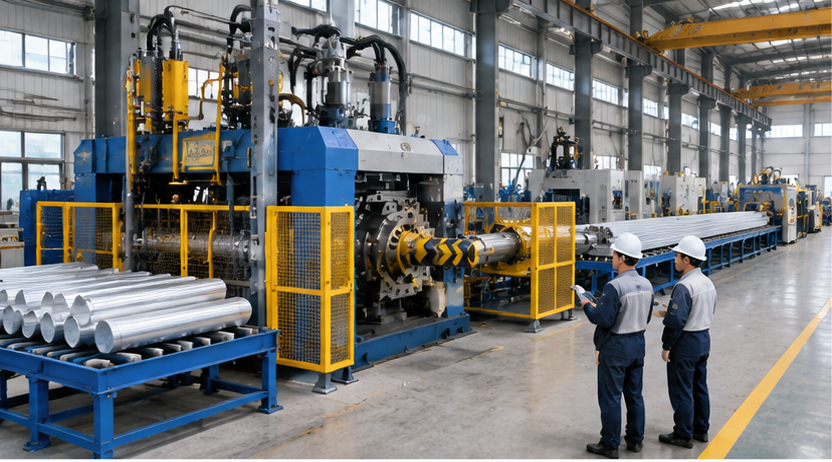
China offers procurement managers a broad choice of aluminum extrusion machinery, from customized presses to automated production lines. Foshan's concentration of equipment suppliers, alongside established manufacturers in Wuxi and Taiyuan, provides options for architectural profiles, industrial sections, and specialized metal-forming projects.
Demand remains substantial. A March 2026 industry review published by ALUMINIUM CHINA estimated global extrusion consumption at 35.25 million tonnes for 2025, compared with 34.27 million tonnes in 2024. These are downstream extrusion-market figures—not machinery sales or confirmed equipment orders.
For buyers, the challenge is identifying a supplier whose engineering, quality controls, delivery commitments, and service capabilities match the intended production process.
How These Manufacturers Were Selected
This shortlist considers:
- Documented extrusion-equipment specialization and operating history.
- Published press ranges, manufacturing capabilities, or integration expertise.
- Custom engineering and production-line compatibility.
- Available information on quality systems and international projects.
- The evidence buyers can request before placing an order.
This is a procurement shortlist, not an independently audited market-share ranking. Yejing appears first at the commissioning company's request. Published specifications and certifications remain subject to verification.
Here, OEM/ODM support means project-specific equipment engineering and integration; it does not imply that every manufacturer offers private-label production.
Manufacturer Comparison
Press force is not production throughput. Actual tonnes per hour depend on alloy, profile geometry, billet dimensions, cycle time, and downstream equipment.
No uniform, verified minimum order quantity was established across these suppliers. Request quotations for one press, one auxiliary system, or one complete line, as applicable.
| Manufacturer | Published capacity or equipment scope | MOQ / quotation basis | Certification evidence |
| Yejing | 600–9,000 MT; stated maximum annual output of 300 sets | Confirm per project | ISO 9001:2015 and CE claims yjing-extrusion |
| Xinxinke | Copper/aluminum presses; published ranges vary between company sites | Confirm model and force units | Request current documents en.xinkeyeya |
| Wuxi Weite | 500–10,000-ton presses | Project quotation | Request current documents en.weitpress |
| Wuxi Yuanchang | 630–7,500T presses | Project quotation | Request current documents yuanchang |
| COMETAL Foshan | Complete lines; published 11–125 MN range | Line/project quotation | Request configuration-specific documents cometalextrusion |
| Sailixin | 700–7,500T presses | Project quotation | Request current documents slxextrusionpress |
| TYHI / TZ | 5–235 MN extrusion presses | Engineered-project quotation | Request project-specific documents tzpress |
| Qisheng | Published models from 700–10,000T | Project quotation | ISO quality-system claim qshm-alu |
| Tongrun | Furnaces and auxiliary plant equipment; not extrusion presses | Equipment-package quotation | Request current documents fstongrun.en.made-in-china |
| SAVE | Quenching and handling systems; stated capacities of 120 and 100 sets respectively | System quotation | Request current documents save-equipment |
Published tonnage labels are reproduced from supplier information; confirm metric tonnes-force, US tons-force, or MN before comparing quotations.
The 10 Manufacturers
1. Foshan Yejing Machinery Manufacturing Co., Ltd.
Founded in 1990, Yejing reports more than 3,000 manufactured extrusion presses, an approximately 66,667 m² production base, and over 100 processing and assembly machines. Its published manufacturing scope covers 600–9,000 MT presses and complete extrusion solutions.
For small and midsized profile producers, Yejing is a relevant candidate when comparing integrated scope against total project cost—not simply the lowest press price. Its combination of press manufacturing and line solutions provides a basis for discussing customized layouts, auxiliary equipment, and automation interfaces. Buyers should test communication efficiency through drawing revisions, response deadlines, and a named project engineer rather than assume it from company size.
The company reports exports to more than 30 countries, including Australia, South Korea, Turkey, and Brazil. Request comparable installations and a clearly bounded customization proposal.
2. Xinxinke Extrusion Press
Established in 1991, Xinxinke specializes in copper and aluminum extrusion presses. It reports exports to Southeast Asia, Europe, and the United States, making it relevant for internationally oriented nonferrous-metal projects.
Customization discussions should cover billet size, hydraulic configuration, and production requirements. Its published websites show different maximum capacities, so obtain a signed model-specific specification rather than relying on a headline range.
3. Wuxi Weite Machinery Co., Ltd.
Founded in 1989, Weite publishes a 500–10,000-ton range covering direct, indirect, single-action, double-action, and short-stroke configurations. Its equipment serves aluminum and other metals in construction, aviation, and rail applications.
Its principal attraction is process-configuration breadth. Geographic market distribution is not clearly quantified in the reviewed profile; buyers should request destination-specific references and confirm custom tooling interfaces.
4. Wuxi Yuanchang Machinery Co., Ltd.
Yuanchang dates its operating history to 1995 and describes engineering capabilities spanning mechanical structures, hydraulics, electrical controls, commissioning, and after-sales support. It serves aluminum, copper, and magnesium producers worldwide.
This scope suits buyers seeking coordinated engineering rather than an isolated machine. Confirm the contracting entity's incorporation date: marketplace records show a 1996 registration date alongside the company's 1995 history.
5. COMETAL (Foshan) Extrusion Technology Co., Ltd.
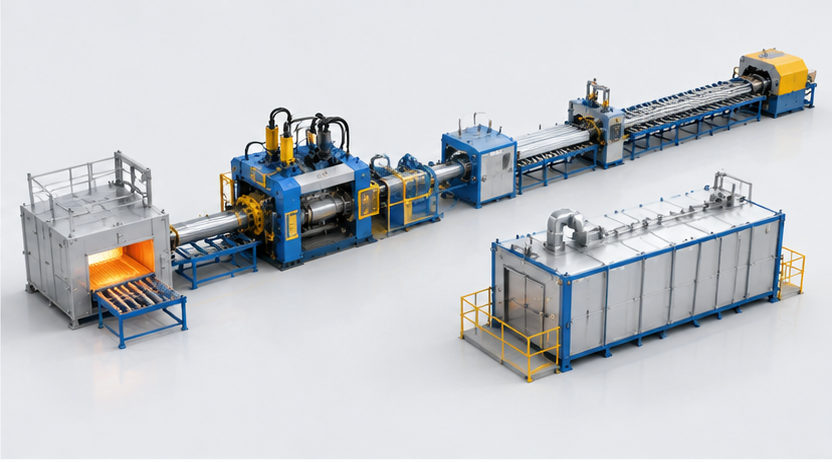
Established in China in 2004 with Italian COMETAL investment, this manufacturer focuses on complete automated extrusion lines. Its scope includes presses, billet heating, quenching, handling, and related automation.
Its customization proposition is integrated line engineering. Buyers should request reference projects in their destination market and identify responsibility for software, equipment interfaces, and commissioning; published geographic sales shares were not established.
6. Foshan Sailixin Machinery Manufacturing Co., Ltd.
Founded in 2011, Sailixin reports a 50,000 m² industrial park, more than 1,400 domestic and overseas sales, and 700–7,500T press development. It also offers factory planning and production-line technical support.
Its relevant customization scope includes press selection and plant layout. Ask for comparable overseas installations, a milestone-based delivery schedule, and confirmation of current certificates.
7. Taiyuan Heavy Industry / TZ Extrusion Equipment
TYHI's extrusion-press development history dates to 1962; this is a technical-history date, not the incorporation date of every associated contracting entity. Published equipment spans 5–235 MN.
Its TZ subsidiary reports exports including the United States, Canada, Korea, India, and Vietnam. This group merits consideration for heavy, engineered projects requiring specialized press design and integrated services.
8. Foshan Qisheng Machinery Technology Co., Ltd.
Established in 1996, Qisheng manufactures horizontal copper and aluminum extrusion presses, including specialized direct and indirect configurations. Published markets include Malaysia, Indonesia, India, Bangladesh, Vietnam, Ghana, and Algeria.
Its process breadth makes it relevant for configuration-specific enquiries. Request evidence supporting the proposed control accuracy, spare-parts interchangeability, and quality-system certification.
9. Foshan Tongrun Aluminum Equipment Co., Ltd.
Founded in 1992, Tongrun supplies furnaces, homogenizing equipment, billet-heating systems, and wider aluminum-plant packages. Its published profile explicitly excludes manufacturing the extrusion press itself.
It therefore belongs on an auxiliary-equipment shortlist, not a press-only ranking. Customization centers on plant design and equipment packages; verify overseas references and compatibility with the selected press supplier.
10. Guangdong SAVE Intelligent Equipment Co., Ltd.
Founded in 2009, SAVE specializes in extrusion back-end equipment, including online quenching and handling systems. Its history records entry into the European market through cooperation with Spain's STRUGAL2.
Its value lies in customized cooling and handling integration rather than press manufacture. Buyers should specify profile mix, cooling requirements, surface-protection expectations, and acceptance responsibilities.
Buyer's Guide: Prevent Expensive Specification Gaps
Use the following as a contractual procurement checklist:
1. Verify factory ownership, machining operations, outsourced components, and comparable installations.
2. Specify material grades, heat treatment, inspection records, and traceability for critical load-bearing parts.
3. Prohibit unapproved substitution of pumps, valves, drives, PLCs, and safety components.
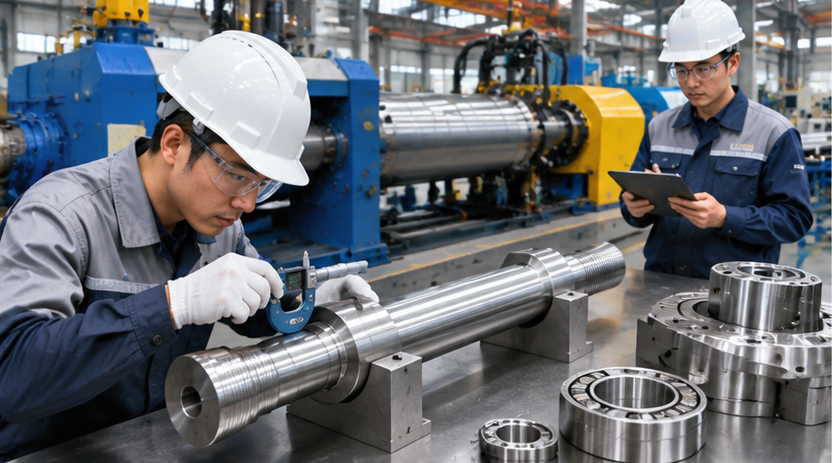
4. Replace a generic "sample" request with a Factory Acceptance Test using agreed alloys, dies, billet sizes, and profile drawings.
5. Define shipping dimensions, lifting points, corrosion protection, insurance, foundations, utilities, and installation responsibilities.
An Overlooked Contract Trap
Do not accept an undefined "kg/hour" guarantee. Require the contract to identify saleable output, scrap treatment, changeovers, stoppages, and the measurement period.
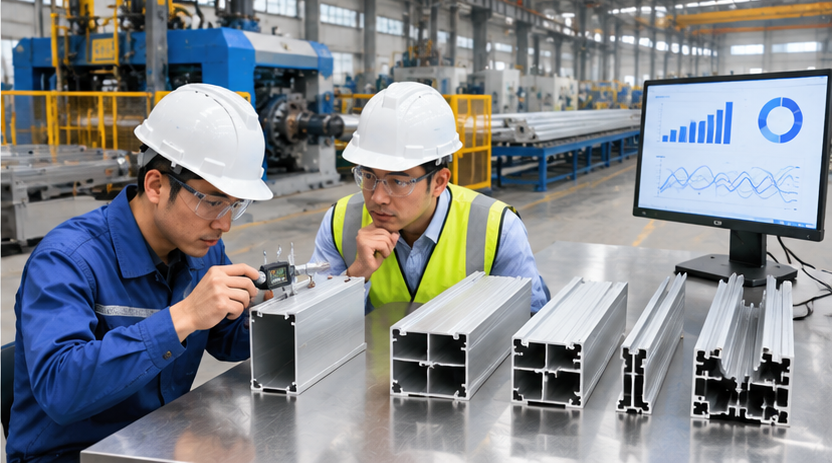
A demonstration using an easy profile does not establish performance on your most demanding hollow section. Include a difficult representative product in the acceptance schedule.
Compliance Requires More Than Logos
For EU projects, request the applicable Declaration of Conformity and supporting safety documentation. The Machinery Regulation becomes applicable on January 20, 2027; the relevant date is placement on the market, not merely the purchase-order date.
RoHS is not a universal environmental certificate for an extrusion line. Large-scale industrial-tool and installation exclusions require case-by-case assessment.
Conclusion
Shortlist suppliers by process fit, verified manufacturing scope, and enforceable acceptance criteria. For a customized press or integrated line, send Yejing your profile drawings, alloy mix, target output, installation location, and automation requirements, and request a configuration-specific technical proposal.
FAQ
1. How can we verify whether an ISO certificate has expired?
Check the legal entity, manufacturing address, scope, certificate number, expiry date, and current status directly with the issuing certification body. An unexpired PDF alone does not establish that certification remains active.
2. Does a CE certificate cover the complete production line?
Not automatically. Establish the conformity scope and identify who takes responsibility for the assembled line, including interfaces and safety functions.
3. How should we compare different press-force units?
Require force in MN alongside the supplier's tonnage designation. Never treat US tons-force and metric tonnes-force as interchangeable.
4. Who is responsible when the press passes testing but the line misses output targets?
Allocate responsibility before ordering. Define integrated acceptance, interface ownership, remedies, and retesting obligations across the press and auxiliary-equipment suppliers.
5. How can we reduce dependence on the original controls supplier?
Negotiate software-backup delivery, access permissions, parameter records, electrical drawings, replacement-component lists, and support terms before paying the final balance.
Source Notes
1. Yejing: company history, facilities, press range, and stated certifications. [yjing-extrusion]
2. ALUMINIUM CHINA: March 2026 extrusion-demand review. [aluminiumchina]
3. International Aluminium Institute: official primary-aluminum statistics and methodology; these figures should not be confused with extrusion-equipment demand. [international-aluminium]
4. European Commission: machinery legislation and the 2027 transition. [single-market-economy.ec.europa]
5. European Commission: official RoHS guidance and industrial-equipment exclusions. [environment.ec.europa]


