Content Menu
● What Is a Window Sash Profile?
● Alloy and Temper Requirements
● Wall Thickness and Section Design
● Dimensional Tolerance Requirements
● Die Design for Hollow Sash Profiles
● Press Tonnage and Billet Selection
● The Extrusion Process Step by Step
● Thermal Break and Surface Finish
● Common Defects and Their Causes
● Quality Control Checklist for Sash Extrusion
● How to Choose Extrusion Equipment for Window Profiles
● Talk to Our Extrusion Engineers
● FAQ
>> 1. Which alloy is best for aluminum window sash profiles?
>> 2. What is the minimum wall thickness for a window sash?
>> 3. What tolerance standard should I follow?
>> 4. What press tonnage do I need for window profiles?
>> 5. Why do hollow sash profiles need porthole dies?
>> 6. How can I reduce twist and bow in sash profiles?
● References
Aluminum window sash profile extrusion succeeds or fails on five things. These are alloy and temper, wall thickness, dimensional tolerance, die design, and press capability. A sash is the moving frame that holds the glass. It needs tight dimensions, a clean surface, and enough strength to carry glazing for decades.
At Foshan Yejing Machinery Manufacturing Co., Ltd., we have built extrusion presses for 36 years. We have delivered more than 3,000 machines, from 600 to 9,000 tons, to customers in over 30 countries. Most of our window-profile customers hit the same problems. This guide covers the key requirements we see, and how to meet them.
What Is a Window Sash Profile?
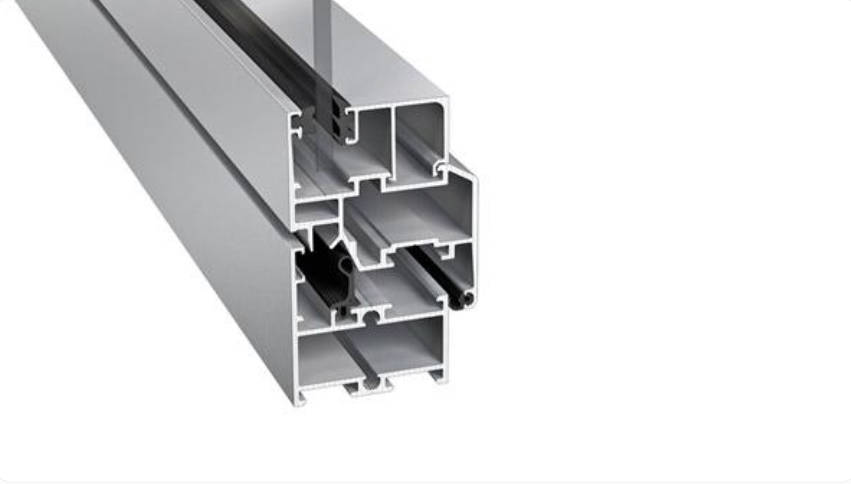
A sash profile is the hollow, multi-chamber section that forms the opening frame of a casement, tilt-and-turn, or sliding window. It must do several jobs at once:
- Hold glass securely in a glazing rebate.
- Accept hardware such as hinges, locks, and rollers.
- Seal against the outer frame with gaskets.
- Resist deformation under wind load and repeated use.
- Look good after anodizing or powder coating.
Because the section is hollow and thin-walled, it is harder to extrude than a simple solid bar. Small errors in the die or process show up as twist, bow, or weld-line defects.
Alloy and Temper Requirements
6063 is the standard alloy for window and door profiles. It extrudes easily, forms thin walls, and gives a smooth surface that takes anodizing well. 6060 and 6063 are widely used for window, door, furniture, and decorative applications because of their good extrudability.
Temper sets the final strength:
- T5: cooled from the extrusion temperature, then artificially aged. This is the common choice for architectural profiles.
- T6: solution heat treated, quenched, and aged. It is roughly 20–30% stronger than T5.
Typical 6063-T6 values are about 241 MPa tensile strength and 214 MPa yield strength.
| Property | 6063-T5 | 6063-T6 |
| Typical use | Sliding and casement windows | Larger or heavily loaded sashes |
| Strength | Moderate | Higher |
| Extrudability | Excellent | Excellent |
| Surface finish | Very good | Very good |
Wall Thickness and Section Design
Uniform wall thickness is the most important design rule. Uneven walls make metal flow at different speeds, which causes distortion.
Practical guidelines:
- Minimum wall for 6063 is around 1.0–1.2 mm.
- Sliding window systems often use 0.6–1.2 mm walls.
- Keep inside corner radii at 0.5 mm or more, ideally 1.0 mm or more.
- Keep the circumscribed circle inside the press capacity.
- Avoid very narrow, deep gaps. These create weak tongues in the die.
In China, GB/T 5237.1-2017 covers extruded profiles for doors, windows, curtain walls, and guardrails. Wall thickness tolerance should be chosen according to the actual assembly requirements and noted in the drawings. For 6060-T5 and 6063-T5 mill finish profiles, the standard calls for high precision grade or better.
Dimensional Tolerance Requirements
Sash profiles must fit the frame, gaskets, and corner connectors. Loose tolerances cause gaps, leaks, and hard-to-close windows.
Typical values for architectural profiles:
| Dimension | Standard tolerance | Precision tolerance |
| Cross-section ≤ 20 mm | ±0.20 mm | ±0.10 mm |
| Cross-section 20–50 mm | ±0.30 mm | ±0.15 mm |
| Cross-section 50–100 mm | ±0.40 mm | ±0.25 mm |
| Straightness | 1.5 mm per 1,000 mm | 0.5 mm per 1,000 mm |
The main standards are:
- GB/T 5237 for China
- EN 755-9 and EN 12020-2 for Europe
- ASTM B221/B221M for North America
Tighter tolerances raise cost. They need slower extrusion speeds, more die corrections, and more inspection. Specify precision only where the fit demands it, such as glazing rebates and gasket grooves.
Die Design for Hollow Sash Profiles
The die defines the cross-section, not the press. Sash profiles are hollow, so they need porthole dies. These have a mandrel that forms the internal cavities and a cap that forms the outside. The aluminum splits around the mandrel legs and rejoins in a welding chamber before it exits.
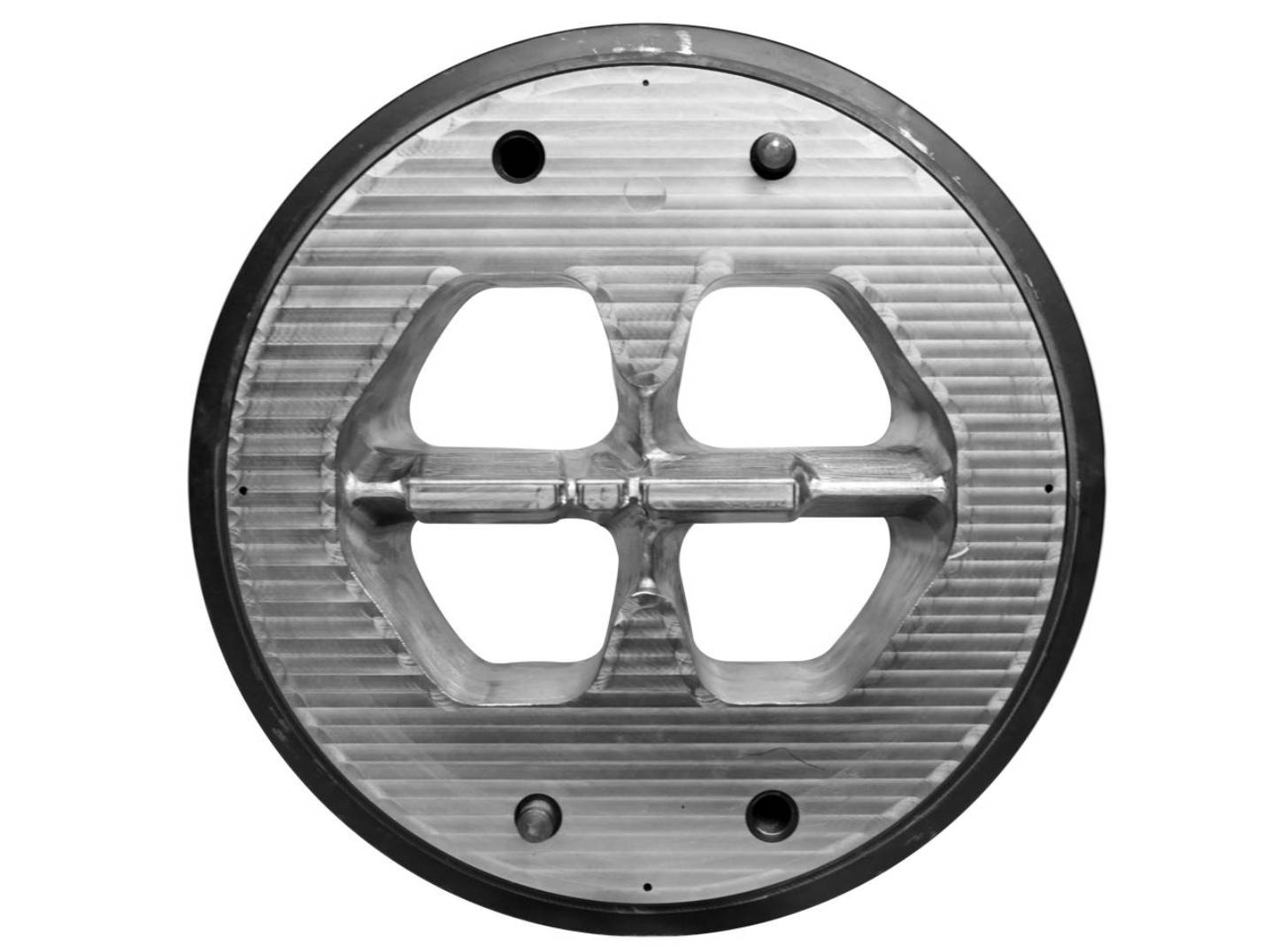
Good die design depends on:
1. Balanced metal flow. Smooth, uniform flow improves quality and extends die life.
2. Correct bearing lengths. Thicker areas get longer bearings to slow them down. This lets every part of the section exit at the same speed.
3. Sound weld seams. Billet temperature and welding chamber design decide weld strength.
4. Simulation. Finite element analysis can find flow and stress problems before steel is cut.
Dies are made from heat-treated H13 steel.
From our experience: Many surface streaks and twist problems blamed on the press come from die correction and cooling. A stable press with accurate temperature and speed control makes die tuning faster and more repeatable.
Press Tonnage and Billet Selection
Choosing the right press matters. Tonnage decides billet size, die size, and the largest profile you can extrude.
| Press tonnage | Typical billet diameter | Typical use |
| 1,000–1,250 T | 5"–6" (about 110–135 mm) | 6063 window and door profiles |
| 1,500 T | About 178 mm | Architectural and general profiles |
| 3,000 T | About 254 mm | Larger sections, higher output |
For many architectural profiles, presses in the 1,250–2,500 ton range are widely used. A 1,000 T or 1,100 T press suits plants focused on 6063 window and door profiles. Keep the extrusion ratio within about 8–12 for stable output.
Before you choose a press, gather these data for each key profile:
- Cross-section drawing
- Alloy and temper
- Maximum width and height
- Wall thickness range
- Weight per meter
- Surface treatment
- Tolerance requirement
- Monthly and annual volume
The Extrusion Process Step by Step
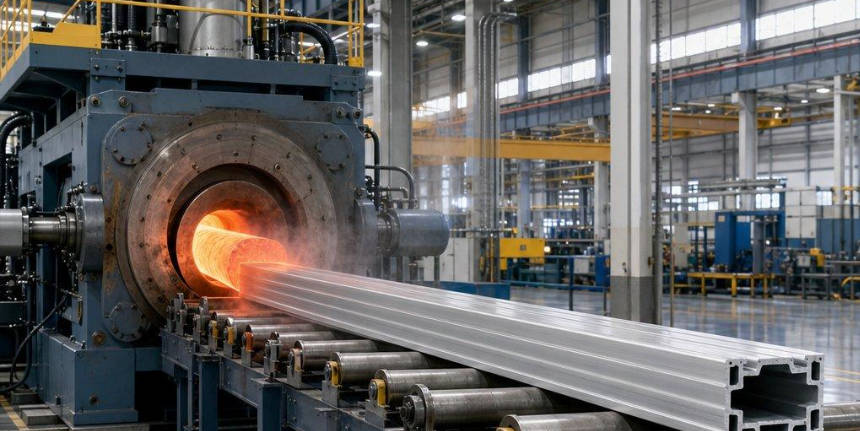
A reliable sash line follows a controlled sequence:
1. Heat the billet to roughly 400–500 °C.
2. Preheat the die and container to avoid thermal shock.
3. Press the billet through the die with the hydraulic ram.
4. Pull and quench with a puller and air or water cooling to keep the profile straight.
5. Stretch to remove residual stress.
6. Cut to length and move to aging.
7. Age in an oven to reach T5 or T6 properties.
8. Inspect dimensions, surface, and mechanical properties.
Each step affects the final result. Billet temperature, ram speed, and cooling rate must be repeatable from shift to shift. Our intelligent extrusion lines are built around this principle. They combine the press, billet heating, run-out table, stretcher, and aging equipment into one coordinated system.
Thermal Break and Surface Finish
Modern sashes often use thermal break technology. A barrier of insulating material separates the inner and outer aluminum parts and reduces heat transfer. The extruded profile must therefore have precise channels for the insulating strip.
Surface finish is part of the requirement too:
- Anodizing film thickness is typically 8–12 microns.
- Powder coating is typically 60–100 microns.
Surface quality starts at the press. Die lines, pickup marks, and streaks show through the finish. A clean, polished die and stable temperature are cheaper than rework after coating.
Common Defects and Their Causes
| Defect | Likely cause | Prevention |
| Twist or bow | Unbalanced flow, uneven cooling | Adjust bearings, balance cooling |
| Weld line visible | Low billet temperature, poor chamber | Raise temperature, improve die |
| Streaks and die lines | Worn or dirty die | Polish and nitride the die |
| Out-of-tolerance walls | Die wear, speed drift | Correct die, control speed |
| Surface blisters | Moisture or trapped air | Dry billets, check upsetting |
Quality Control Checklist for Sash Extrusion
Use this list on every production run:
- Check alloy and temper against the order.
- Measure key dimensions with calibrated gauges at the start, middle, and end of the run.
- Test straightness on a flat table.
- Inspect the surface under good light.
- Check hardness after aging.
- Record billet temperature and speed for traceability.
- Test a sample assembly with the frame and gasket.
For export, buyers expect documented process control. Our own ISO 9001 and CE certifications reflect the same approach in machine building. We also test and commission every press before shipment.
How to Choose Extrusion Equipment for Window Profiles
When you invest in a line, consider the following:
1. Match the press to your product mix, not only today's order.
2. Check hydraulic and temperature stability, because stable control reduces scrap.
3. Include auxiliary equipment, such as billet heaters, stretchers, and ovens.
4. Plan for the future, including thinner walls and larger profiles.
5. Confirm after-sales support, including installation, training, and spare parts.
A complete solution works better than a press bought alone. We supply the press, auxiliary equipment, and intelligent production lines as one package. We also customize them to your profile range.

Talk to Our Extrusion Engineers
If you plan a new window profile line or want to upgrade an existing one, send us your profile drawings, alloy, and output target. Our engineers will recommend a suitable press from 600 to 9,000 tons and a full equipment configuration. Contact Foshan Yejing Machinery today for a tailored proposal.
FAQ
1. Which alloy is best for aluminum window sash profiles?
6063 is the most common choice. It extrudes easily, forms thin walls, and gives a smooth surface for anodizing. Use T5 for most sashes and T6 when more strength is required.
2. What is the minimum wall thickness for a window sash?
For 6063, the minimum is roughly 1.0–1.2 mm. Some sliding window systems use walls of 0.6–1.2 mm. Always confirm with your die maker and press.
3. What tolerance standard should I follow?
GB/T 5237 applies in China, EN 755-9 / EN 12020-2 in Europe, and ASTM B221 in North America. Choose the standard that matches your market. Precision grade is advised for assembly-related dimensions.
4. What press tonnage do I need for window profiles?
Plants producing 6063 window and door profiles typically choose a 1,000 T or 1,100 T press. Wider product ranges often use 1,250–2,500 T presses. The exact choice depends on billet size, profile size, and output.
5. Why do hollow sash profiles need porthole dies?
A hollow section has enclosed voids. A porthole die with a mandrel and cap forms those voids while the metal rejoins in the welding chamber.
6. How can I reduce twist and bow in sash profiles?
Balance the metal flow with correct bearing lengths, keep walls uniform, and cool evenly. A stable press and a well-corrected die also help.
References
1. [Aluminum Extrusion Design Guide: Profiles, Alloys & Tolerances]
2. [Aluminum Extrusion Press Tonnage Selection Guide for Profile Production]
3. [Aluminum Extrusion Design Guide: Tolerances, Alloys & Surface Finish]
4. [798 Series Aluminum Window Profile – Custom Extrusion Supplier]
5. [GB/T 5237.1-2017 Wrought aluminium alloy extruded profiles for architecture]
6. [Aluminum Extrusion Process From Billet to Finished Profile]
7. [Aluminum Extrusion Dies: This is What Designers Should Know]
8. [Understanding Aluminum Extrusion Dies and Tooling]
9. [How to Choose the Right Tonnage for Your Aluminum Extrusion Machine]
10. [Aluminum Extrusion Press Tonnage Selection Guide]
11. [Thermal Break Aluminum Windows Profiles Manufacturer & Supplier]


