Content Menu
● Why Window and Curtain Wall Profiles Differ
● The Four Factors That Decide Compatibility
>> 1. Circumscribed circle size
>> 2. Billet diameter and container
>> 3. Extrusion ratio and hollow design
>> 4. Output and wall thickness
● A Practical Sizing Rule
● Step-by-Step: Check Whether Your Press Fits
● Equipment Beyond the Press
● When Two Presses Make More Sense
● Our Experience
● Common Mistakes to Avoid
● Next Step
● Frequently Asked Questions
>> 1. What tonnage is best for both window and curtain wall profiles?
>> 2. Can a 1,000-ton press make curtain wall profiles?
>> 3. Does hollow profile design change the press I need?
>> 4. Which aluminum alloy is used for both product types?
>> 5. Is it better to buy one large press or two smaller ones?
>> 6. Can you customize a press for my profile range?
● References
Yes, one extrusion press can produce both window and curtain wall profiles, but only if the press is sized and configured for the larger of the two jobs. A mid-range press of about 1,800 tons or more usually covers both. Smaller presses of 1,000 to 1,250 tons run window profiles well but struggle with curtain wall sections.
I have spent 36 years building aluminum extrusion presses at Foshan Yejing Machinery. Equipment compatibility is the question I hear most from profile makers who want to serve both markets.
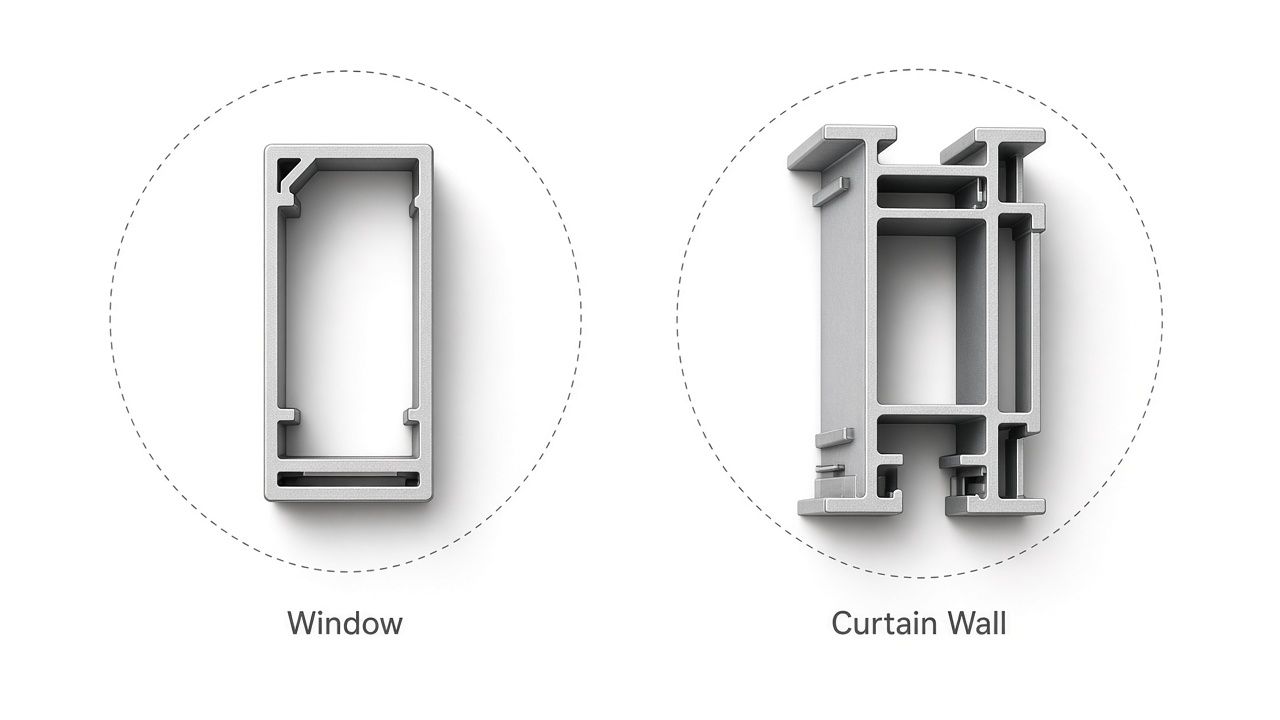
Why Window and Curtain Wall Profiles Differ
The two product families put very different demands on a press.
- Window and door profiles are small, thin-walled and light. They are mostly 6063 alloy.
- Curtain wall profiles are larger and more complex. They include mullions and transoms with thick walls and deep hollow chambers.
- Thermal-break sections add a second layer of complexity in either family.
Industry guidance puts window and door work at roughly 600 to 1,450 tons. Curtain wall work often needs 1,800 tons or more. Glass curtain walls on large commercial buildings may call for 3,000 tons or higher.
The Four Factors That Decide Compatibility
1. Circumscribed circle size
The circumscribed circle is the smallest circle that fully encloses a profile's cross-section. If it exceeds the press's die capacity, extrusion is impossible, whatever the tonnage.
A wide, flat curtain wall mullion can need a bigger press than a compact profile of the same weight. Window profiles usually sit well inside the circle of a mid-size press.
2. Billet diameter and container
Container size caps the billet, and the billet limits die size. Typical pairings are:
| Press tonnage | Typical billet diameter | Typical use |
| 1,000–1,250T | 5–6 in (about 127–135 mm) | Window and door profiles |
| 1,450–1,800T | 6–7 in (about 152–178 mm) | Larger architectural and industrial sections |
| 2,000–2,500T | 7–10 in (about 178–254 mm) | Large, thick-wall shapes |
| 3,000T+ | 10 in and above | Extensive structural profiles |
3. Extrusion ratio and hollow design
The extrusion ratio compares billet cross-section to profile cross-section. Primary extrusion typically needs a ratio of about 8 to 12, and hollow profiles need a higher one.
Hollow curtain wall sections need porthole or bridge dies. These add flow resistance and raise pressure demand. A press that handles solid window trims comfortably may be at its limit on a multi-cavity mullion.
4. Output and wall thickness
Thin-wall window profiles need stable billet temperature, balanced metal flow and controlled speed. Thick-wall curtain wall profiles need more force and longer cooling. A press must hold quality at both ends.
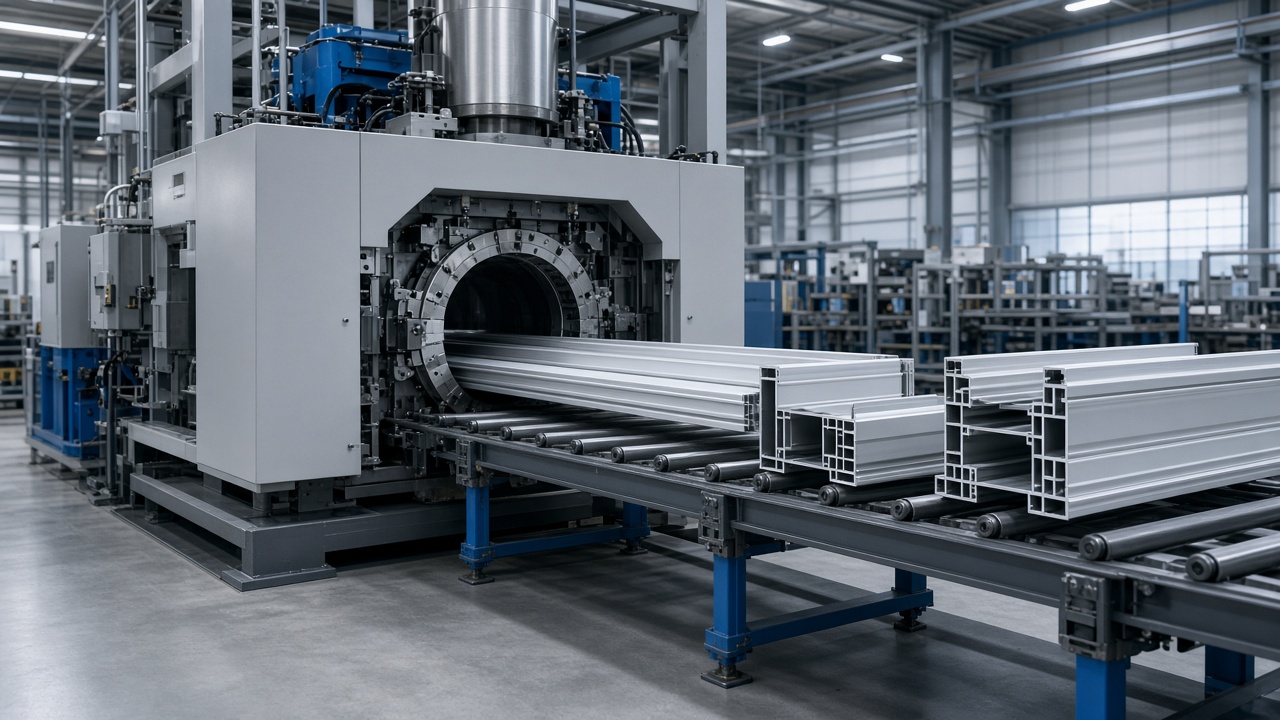
A Practical Sizing Rule
Don't size a press for your average order. Size it for the largest profile you expect to sell in the next five to ten years.
Here is how that works in practice:
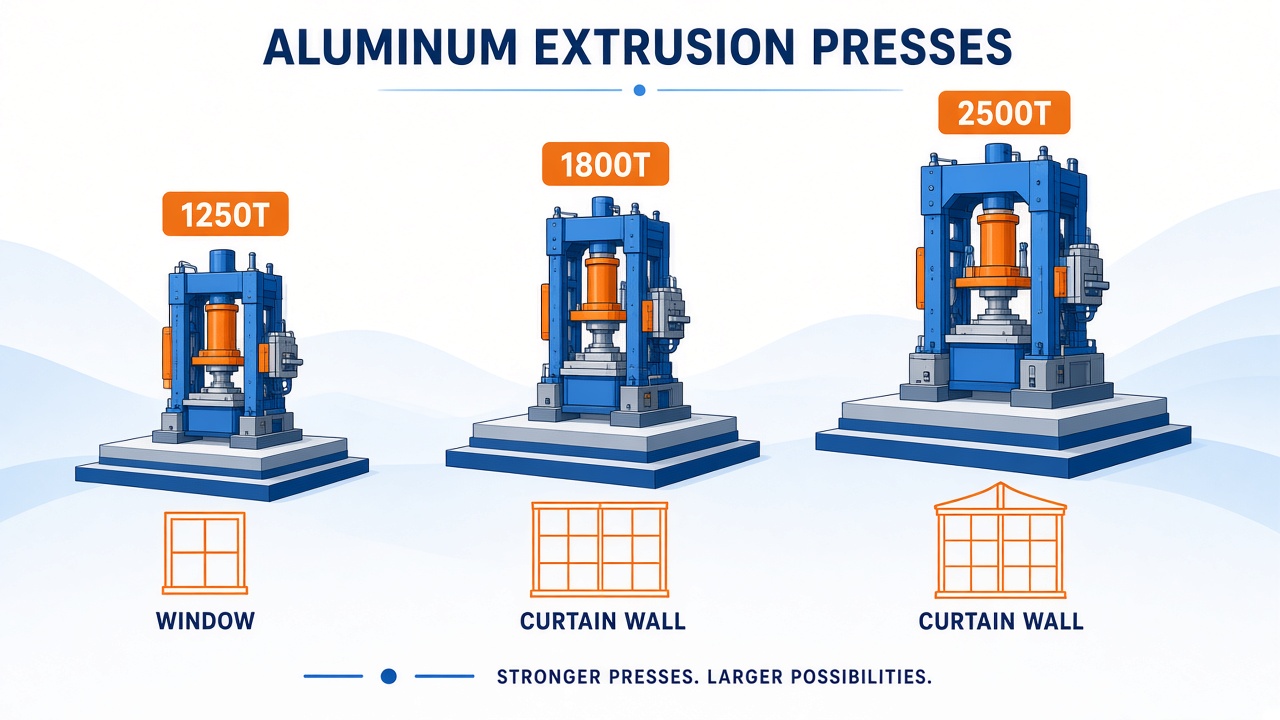
- Windows only: a 1,000–1,250T press is efficient.
- Windows plus light curtain wall: choose 1,800T (7-inch) as a baseline.
- Windows plus heavy structural curtain wall: choose 2,500T–3,600T.
Buyers who pick the smallest press that fits today's orders often face an expensive upgrade later. One tonnage class larger usually costs far less than a second press.
Step-by-Step: Check Whether Your Press Fits
1. List your target profiles. Include the heaviest curtain wall section.
2. Measure each circumscribed circle. Compare it with the press's die capacity.
3. Confirm alloy and temper. 6063 is common for both, but strength requirements may differ.
4. Calculate the extrusion ratio for each profile.
5. Identify solid and hollow shapes. Hollow shapes raise tonnage needs.
6. Check die and container availability. Several die sizes may be needed.
7. Test with trial dies before committing to production.
Equipment Beyond the Press
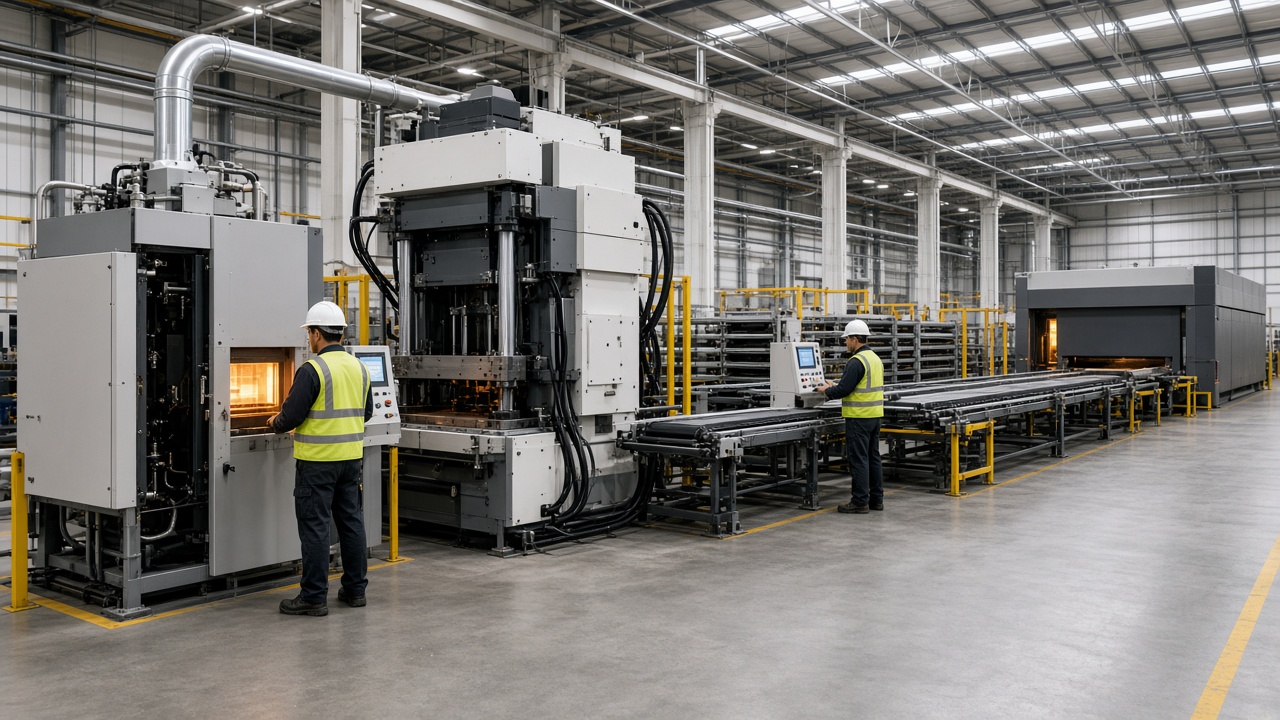
The press is only part of the answer. To switch between window and curtain wall work smoothly, the rest of the line must adapt:
- Billet heating furnace: accurate temperature control for different billet lengths.
- Die ovens: dies are typically preheated to 750–900°F (about 400–480°C) for 4–6 hours before use.
- Puller and cooling table: longer, heavier curtain wall profiles need stronger handling.
- Stretcher and saw: these must be sized for the longest and widest profile.
- Aging ovens: needed for the tempers your curtain wall specifications call for.
Frequent die changes between small and large profiles also reduce uptime. A quick die-change system and a good die management plan protect profitability.
When Two Presses Make More Sense
One press is not always the best answer. Consider two presses when:
- Window demand is high-volume and needs continuous, fast output.
- Curtain wall orders are large, wide profiles that tie up a big press for long runs.
- Switching dies and billet sizes would waste more production time than a second machine costs.
Many successful plants run a 1,250–1,800T press for windows and a 2,500T or larger press for curtain wall. Others start with one flexible 1,800T press and add capacity as orders grow.
Our Experience
Foshan Yejing Machinery has built more than 3,000 extrusion presses over 36 years. Our 6.6 万 m² (66,000 m²) facility has more than 100 machining and assembly machines. We process, assemble and commission presses from 600 to 9,000 tons.
We hold ISO9001 and CE certification and are a registered supplier with the EU information center. Our presses run in more than 30 countries, including Australia, South Korea, Turkey and Brazil.
When a customer asks about dual-purpose production, we review their profile drawings first. We then recommend a tonnage, container and line configuration that fits both markets without overspending.
Common Mistakes to Avoid
- Choosing tonnage from window profiles alone and discovering later that curtain wall dies do not fit.
- Ignoring the circumscribed circle. Tonnage alone does not decide whether a profile can run.
- Overlooking runout and handling length. Curtain wall profiles are often longer and heavier.
- Skipping future-demand planning.
- Buying on price alone without checking die and container options.
Next Step
Send us your profile drawings, alloy and annual output target. Our engineers will review them and recommend a press, die and line configuration. Contact Foshan Yejing Machinery for a free technical proposal.
Frequently Asked Questions
1. What tonnage is best for both window and curtain wall profiles?
A press of 1,800 tons (7-inch) is a common starting point for mixed production. Heavy structural curtain wall sections may call for 2,500 tons or more.
2. Can a 1,000-ton press make curtain wall profiles?
Only limited, small curtain wall sections. A 1,000-ton press is better suited to window and door profiles. Larger curtain wall profiles usually need 1,250 tons or more.
3. Does hollow profile design change the press I need?
Yes. Hollow profiles use porthole or bridge dies, which add resistance and raise pressure demand. They often need a larger press than solid shapes of similar size.
4. Which aluminum alloy is used for both product types?
6063 is widely used for window frames, door frames and curtain walls because of its good extrudability and surface quality.
5. Is it better to buy one large press or two smaller ones?
It depends on volume and product mix. One flexible press has the lower investment. Two presses reduce die-change downtime and suit high volumes.
6. Can you customize a press for my profile range?
Yes. We design container size, tonnage and auxiliary equipment around your drawings and output target.
References
1. - [Aluminium Extrusion Press Applications for Curtain Wall and Structural Systems – Arzir] [arzir]
2. - [Aluminum Extrusion Process – Bonnell Aluminum] [bonnellaluminum]
3. - [Selection Guidance of Capacity Model of Aluminum Extrusion Press – Nenghong] [fsnenghong]
4. - [Large Aluminum Extrusion Manufacturers: Essential Points Before You Source – Shengxin Aluminium] [shengxinaluminium]
5. - [How to Choose the Right Tonnage for Your Aluminum Extrusion Machine – Extruderpress] [extruderpress]
6. - [How to Choose the Tonnage of Aluminum Extrusion Press? – Machine4Aluminium] [machine4aluminium]
7. - [Aluminum Extrusion Press Tonnage Selection Guide – SLX] [slxextrusionpress]
8. - [Aluminum Extrusion Design Guide – AMFAS International] [amfasinternational]


