Content Menu
● What Is an Automatic Extrusion Line?
● Market Overview: Russia's Extrusion Industry
>> Steady Growth and Strategic Drivers
>> Industry Challenges
● Key Advantages of Automatic Extrusion Lines
● Top Automatic Extrusion Line Manufacturers And Suppliers in Russia
>> 1. MosFlowline
>> 2. Plastic OJSC
>> 3. Beier Machinery
>> 4. Bandera (Italian Origin, Russian Operations)
>> 5. Liansu Machinery (China-based Manufacturer)
>> 6. Realit (Russian Manufacturer)
>> 7. Other Notable Suppliers and Networks
● Technology Trends and Digitalization in Extrusion Lines
>> IoT-Enabled Production Monitoring
>> AI and Predictive Maintenance
>> Energy-Saving Enhancements
>> Smart Automation and Robotics
>> Flexible Multi-Layer Extrusion
● International Partnerships and OEM Services
● The Role of Chinese Manufacturers
● Conclusion
● Related Questions & Answers
>> Q1: What sectors drive demand for automatic extrusion lines in Russia?
>> Q2: How do automatic extrusion lines improve product quality?
>> Q3: Why are OEM services from China popular among Russian buyers?
>> Q4: What new technologies are impacting the Russian extrusion industry?
>> Q5: Which Russian company operates the largest extrusion line?
The Automatic Extrusion Line Manufacturers And Suppliers sector in Russia has become a vital driver of industrial progress. Across key industries such as construction, automotive, packaging, and manufacturing, extrusion technology plays a crucial role in producing high-quality plastic, metal, and composite products efficiently. With Russia focusing on industrial automation, import substitution, and sustainability, the demand for advanced automatic extrusion lines continues to grow.
This article provides an in-depth overview of Russia's leading suppliers, the advantages of automation in extrusion, technological trends, and the international collaborations shaping the marketplace. By integrating detailed insights on major manufacturers, industry drivers, and OEM opportunities, this comprehensive guide serves businesses, engineers, and brand owners looking to understand or partner within this sector.
What Is an Automatic Extrusion Line?
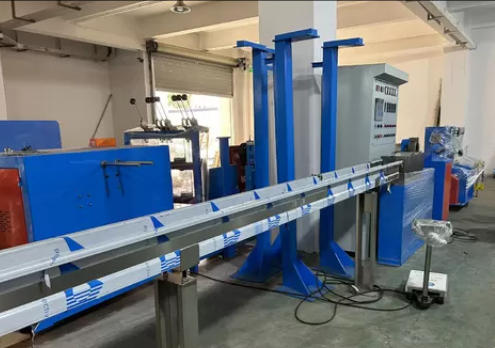
An automatic extrusion line is a fully integrated manufacturing system designed to produce continuous profiles, pipes, sheets, or films using raw materials like plastic, aluminum, or composites. These lines integrate several components — extruders, dies, cooling systems, haul-off units, cutting machines, and automated quality inspection devices — into a seamless production flow controlled by programmable logic controllers (PLCs) and robotics.
The automation aspect means key parameters such as temperature, pressure, and throughput speed are monitored and adjusted in real-time, ensuring product consistency, reducing waste, and maximizing efficiency. In comparison to semi-automatic or manual extrusion systems, automatic lines deliver significant improvements in throughput, energy consumption, labor savings, and product quality.
The extrusion process itself involves melting raw materials through mechanical shearing and heat, then forcing the molten mass through a shaped die. The extruded shape cools and solidifies into the desired profile. Automation allows multiple product types and sizes to be produced on the same line via quick changeovers, programmable recipes, and advanced inspection systems.
Market Overview: Russia's Extrusion Industry
Steady Growth and Strategic Drivers
The extrusion industry in Russia is growing steadily, propelled by various internal and external factors:
- Sector Demand: Russia's booming construction sector demands pipes, insulation panels, claddings, and profiles. Packaging industries require films, molded parts, and flexible plastic goods. The automotive industry prefers lightweight plastic and aluminum components for enhanced fuel efficiency. Consumer electronics also utilize extrusion technology for cable insulation and housing parts.
- Government Policy: Russia's industrial strategy prioritizes modernization and import substitution to decrease dependency on foreign machinery and technology. The government encourages automation investments through subsidies, tax incentives, and industrial innovation programs.
- Domestic Capability: Local manufacturers, while technologically evolving, increasingly cooperate with international OEMs and suppliers to adopt state-of-the-art extrusion lines adapted to Russian production demands.
- International Influence: Russian companies actively source equipment and technology from leading manufacturers in Germany, Italy, and China, integrating cutting-edge automation and digitalization into local operations.
Industry Challenges
Despite growth, the extrusion sector faces challenges such as volatile raw material costs, fluctuating currency exchange rates affecting imports, and the need for high-skilled labor to manage sophisticated automatic lines. Continuous training, technical support, and after-sales service are critical to maximizing uptime and line efficiency.
Key Advantages of Automatic Extrusion Lines
Automatic extrusion lines offer multiple tangible advantages across manufacturing sectors:
- Consistent Product Quality: Computer-controlled parameters minimize human errors, leading to uniform wall thickness, precise dimensions, and minimal defects. Products meet tighter tolerance requirements, essential for demanding applications like automotive and aerospace.
- Higher Production Capacity: Automated lines operate continuously at optimized speeds, significantly increasing throughput compared to semi-automatic systems. This scalability supports large volume orders with shorter lead times.
- Energy Efficiency: Precise control avoids over-heating or over-cooling, cutting unnecessary energy consumption. Modern lines employ energy-saving motors, optimized screw designs, and regenerative thermal systems.
- Labor Optimization: Automation reduces manual intervention by integrating robots for material handling, inline inspections, and packaging. Labor is redeployed to higher-value tasks such as programming and quality assurance.
- Product Flexibility: Rapid tool and die changeovers enable manufacturers to switch between products with minimal downtime. Programmable settings support different materials, multilayer compositions, and custom shapes.
- Waste Reduction: Inline defect detection and adjustments decrease scrap rates, lowering raw material wastage and production costs.
- Traceability and Data Analytics: IoT integration allows process data collection, enabling continuous improvement, predictive maintenance, and remote technical support.
Top Automatic Extrusion Line Manufacturers And Suppliers in Russia
Russia's extrusion market features a combination of renowned domestic companies and international suppliers. Here are some key players leading the industry:
1. MosFlowline
Based in Moscow, MosFlowline operates the largest pipe extrusion facility in Russia, specializing in PUR (polyurethane) insulated pipes with diameters reaching 1,600 mm. This capacity supports district heating networks and infrastructure projects. The company's production lines incorporate advanced automation sourced from German manufacturers, enabling high output volumes of approximately 600 km of insulated pipe annually.
MosFlowline benefits from a vertically integrated supply chain, extensive R&D capabilities, and government contracts focused on import substitution of critical construction materials.
2. Plastic OJSC
Plastic OJSC is a major player producing ABS and EPS plastics through injection molding and extrusion compression techniques. They supply over 250 plastic components, primarily serving Russian automotive giants such as VAZ, UAZ, KAMAZ, and GAZ. Their extrusion lines are fitted with modern control systems, ensuring repeatability and compliance with automotive standards.
3. Beier Machinery
Originating from Germany but active in Russia, Beier Machinery specializes in high-efficiency HDPE extrusion lines. Russian clients have invested in their 800 mm, four-layer HDPE pipe extrusion lines designed for gas and water pipelines. The company is well-known for integrating automation technologies and sustainable manufacturing practices including material recycling solutions.
4. Bandera (Italian Origin, Russian Operations)
Bandera is famed for its sheet extrusion lines featuring twin-screw extruders and gravimetric dosing units. Their automated systems provide real-time process monitoring, essential for high-quality sheet and film production in packaging and industrial sectors. Their Russian operation supports local markets with installation, maintenance, and training.
5. Liansu Machinery (China-based Manufacturer)
Liansu offers a broad spectrum of extrusion lines including pipe, panel, and film extrusion with advanced automation features. They are heavily involved in supplying turnkey solutions to Russian companies, emphasizing flexible recipe management, digital touchscreens, and automated feeding systems. Their competitive pricing and reliable service make them a preferred OEM partner.
6. Realit (Russian Manufacturer)
Specializing in aluminum profile extrusion, Realit leads in producing customized profiles for the building and transport sectors within Russia. They utilize fully automatic extrusion lines that incorporate multilayer and composite material capabilities to meet evolving architectural and automotive design needs.
7. Other Notable Suppliers and Networks
Russian industrial users rely on machinery from leading German manufacturers such as Battenfeld Extrusionstechnik and Reifenhäuser Group, as well as large Chinese corporations including JWELL, which maintain local distributor networks providing technical and after-sales support. This facilitates the integration of best-in-class technology while ensuring timely servicing and spare parts availability.
Technology Trends and Digitalization in Extrusion Lines
The Russian extrusion sector is rapidly adopting advanced technologies to maintain competitiveness and efficiency:
IoT-Enabled Production Monitoring
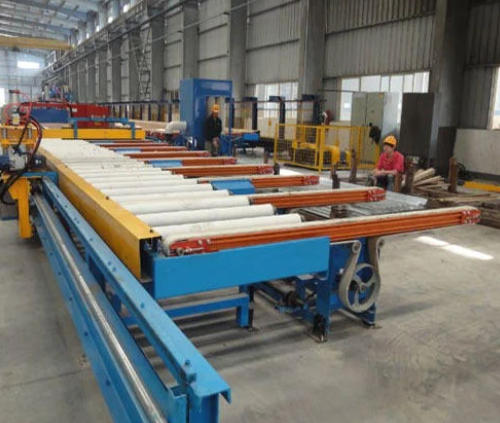
Automatic extrusion lines now feature embedded sensors that continuously track melt temperature, pressure, throughput speed, and product dimensions. Data is fed to centralized control rooms through IoT platforms, allowing operators to intervene promptly and maintain optimal conditions.
AI and Predictive Maintenance
Artificial intelligence models analyze historical and real-time data to forecast equipment wear and potential breakdowns. Predictive maintenance scheduling minimizes unplanned downtime and extends the lifespan of key components such as extruder screws and die assemblies.
Energy-Saving Enhancements
New extruder designs integrate energy-efficient heating systems and are paired with cooling units that recycle thermal energy. Screw geometry optimization reduces mechanical load and promotes uniform melting, leading to lower power consumption.
Smart Automation and Robotics
Robotic arms and conveyors handle material feeding, product stacking, and packaging. Integration with vision systems ensures automatically detecting surface defects and dimensional deviations without halting production lines.
Flexible Multi-Layer Extrusion
Lines equipped with multiple extruders enable the co-extrusion of different polymers or composites, allowing manufacturers to produce multi-layered pipes and profiles with enhanced mechanical and barrier properties.
International Partnerships and OEM Services
The Russian extrusion market's expansion is strongly supported by international partnerships:
- Russian manufacturers, wholesalers, and foreign brands commonly engage in OEM collaborations with Chinese and European suppliers to customize extrusion lines tailored to specific industrial needs.
- OEM services often include turnkey project management, equipment installation, staff training, and ongoing technical support.
- Localization efforts emphasize adapting machines for Russian operating conditions, local regulatory compliance, and sourcing some components domestically to reduce costs and lead times.
- This network of partnerships enables Russian companies to access the latest innovation in extrusion technology while benefiting from competitive pricing and comprehensive after-sales services.
The Role of Chinese Manufacturers
Chinese manufacturers have become indispensable partners in Russia's extrusion industry for several reasons:
- They provide broad portfolios of extrusion lines including pipe, profile, panel, and film production with high automation levels.
- Their equipment features user-friendly digital touchscreens, automated recipe transitions, and remote diagnostics—key for clients seeking operational flexibility and reduced labor costs.
- Competitive pricing combined with global logistics enable rapid delivery and installation at Russian sites.
- Many Chinese suppliers offer OEM branding, training programs, and tailored after-sales assistance that meet Russia's demanding industrial standards.
This strong presence complements Russian efforts to modernize their extrusion infrastructure while maintaining cost efficiencies.
Conclusion
Russia boasts a vibrant and growing landscape of Automatic Extrusion Line Manufacturers And Suppliers, driven by rising industrial demand, technological modernization, and strategic international OEM collaborations. Leading domestic players like MosFlowline and Realit combine with global giants from Germany, Italy, and China to supply advanced automated extrusion systems that elevate production capacity, energy efficiency, and product quality.
Innovations such as IoT-enabled monitoring, AI-driven predictive maintenance, and multi-layer co-extrusion enhance line flexibility and competitiveness. Partnerships with Chinese manufacturers, in particular, play a pivotal role in providing cost-effective turnkey extrusion solutions backed by robust training and after-sales support.
Together, these factors position Russia's extrusion industry to meet evolving market challenges, capitalize on industrial automation trends, and contribute significantly to sectors ranging from construction to automotive and packaging. The ongoing modernization of extrusion capabilities supports Russia's ambitions for industrial self-reliance and sustainable manufacturing growth.
Related Questions & Answers
Q1: What sectors drive demand for automatic extrusion lines in Russia?
A: Packaging, construction, automotive, consumer electronics, and infrastructure developments are the primary sectors fueling demand.
Q2: How do automatic extrusion lines improve product quality?
A: By automating temperature control, pressure, and line speed in real-time, they minimize errors, reduce scrap, and ensure consistent output.
Q3: Why are OEM services from China popular among Russian buyers?
A: Chinese OEMs offer cost-effective, highly automated, and customizable extrusion lines with comprehensive training and after-sales support, fitting Russian market needs.
Q4: What new technologies are impacting the Russian extrusion industry?
A: IoT integration, AI-based predictive maintenance, energy-efficient extruder designs, and flexible multi-layer co-extrusion capabilities are reshaping the sector.
Q5: Which Russian company operates the largest extrusion line?
A: MosFlowline in Moscow runs the largest PUR-insulated pipe extrusion line with a diameter capacity of up to 1,600 mm, making it a market leader.
If you need further expansion on any specific sections or additional topics, feel free to ask!


